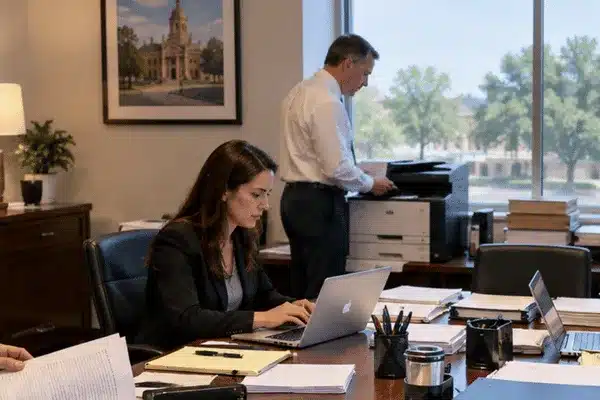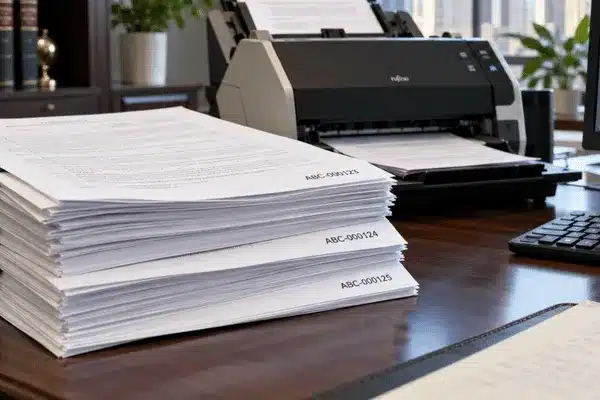

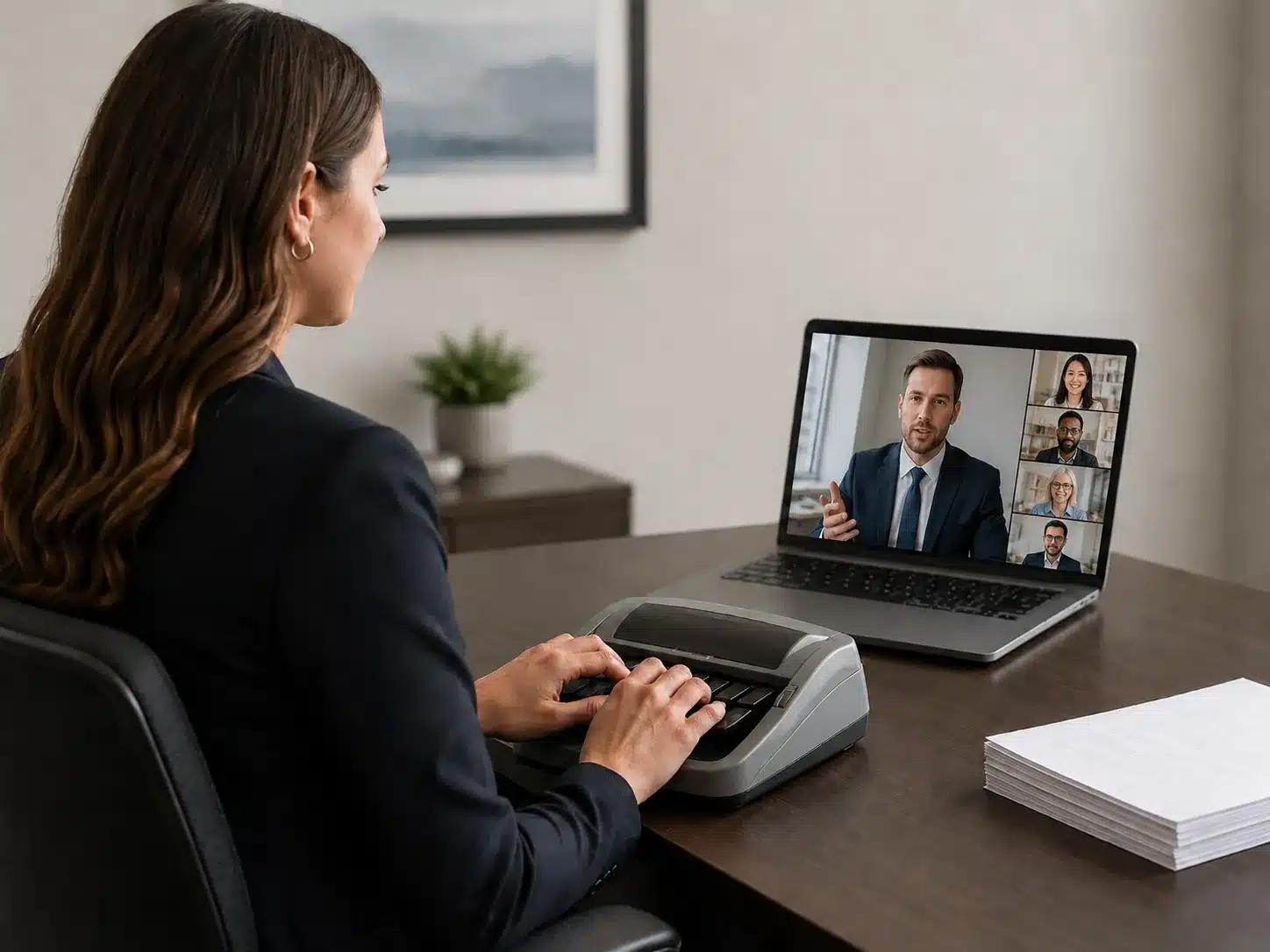
Court reporting services are going through a major shift. AI transcription tools and remote depositions are changing how law firms handle legal records. But with new technology comes new risks. This guide breaks down what’s happening in 2026, what it means for your firm, and how to stay protected.
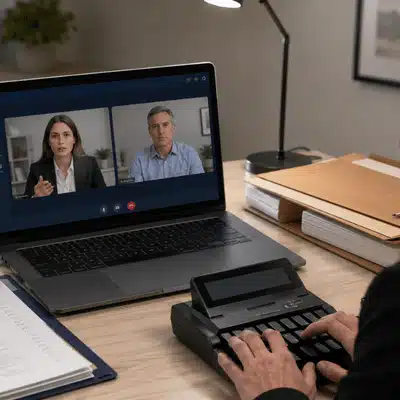
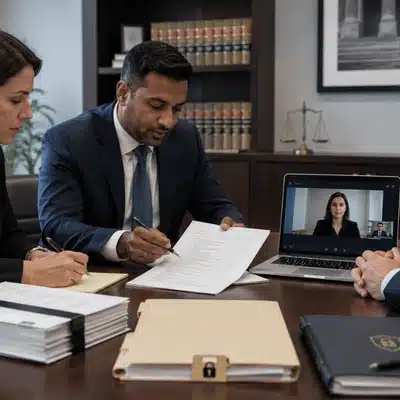
In numerous jurisdictions, remote depositions have become a common practice, no longer a stopgap measure. Depositions may be taken by telephone or other remote means if the parties agree or the court orders it, according to Cornell Law School’s Legal Information Institute.
States like Washington, Minnesota, and Massachusetts have updated their rules to address remote depositions more clearly. Minnesota Rule 30.02 was amended to address remote-technology depositions, while Massachusetts Rule 30(b)(4) now allows remote depositions by videoconference or telephone.
Leading court reporting companies now offer fully remote options. These include secure video platforms, real-time feeds, and encrypted transcript delivery.
AI-powered speech recognition tools are growing fast. Court reporting firms use them to speed up first drafts. But the National Court Reporters Association (NCRA) is clear: AI-generated transcripts are “untrustworthy and risky” without human oversight.
A key driver is supply. The National Center for State Courts (NCSC) has reported broad court staffing shortages, including shortages involving court reporters, clerks, interpreters, and other court roles. NCSC also reported that more than 70% of survey respondents experienced staffing shortages in the last year, and 20% reported delays in more than 30% of cases.
AI helps fill some of that gap, but cannot replace certified reporters.
Accuracy is where the gap shows up clearly. Here is how the two compare:
A small word error rate may sound minor. But in a legal transcript, even one wrong word can change the meaning of testimony. Certified reporters review and certify all final transcripts, whether they produced the draft or an AI did.
The hybrid model is becoming common in court reporting. AI creates the first draft. A certified reporter reviews, edits, and signs off. This keeps turnaround fast while maintaining accuracy.
Remote court reporting raises real security concerns. Legal records often include protected health information (PHI) and sensitive client data. ABA Model Rule 1.6 requires lawyers to protect client information by making reasonable efforts to prevent unauthorized access or disclosure, according to the American Bar Association.
Top court reporting companies follow strict protocols:
As cybersecurity guidance often warns, the longer the chain of custody, the greater the opportunity for a breach. Court reporting firms that use public cloud tools without encryption can put client records at risk.
When choosing court reporting firms, ask about SOC 2 compliance, HIPAA safeguards, and how they handle exhibit marking and storage.
Many legal workflows have adopted e-transcripts, but the rules of acceptance, filing, and certification vary from court to court or jurisdiction to jurisdiction.
Many U.S. states allow remote online notarization (RON), and rules and requirements differ by jurisdiction. The National Association of Secretaries of State monitors remote electronic notarization developments, and industry guidance notes that 47 states and Washington, D.C. accept e-notarization and RON services in some fashion.
RON may demand digital seals, encrypted journal entries, and video ID verification. Court reporting services that give RON must adhere to the relevant state rules.
People who are hard of hearing or deaf benefit from real-time captioning, or CART. Reporters with non-English testimony are assisted by foreign language interpreters. Although AI translation systems are getting better, they still make mistakes when it comes to legal situations. Qualified human translators remain the safer choice for judicial testimony when it comes to accuracy, admissibility, and fairness.
Firms that plan ahead will stay ahead. Here is what leading court reporting companies recommend:
The U.S. Bureau of Labor Statistics projects about 1,700 annual job openings for court reporters and simultaneous captioners through 2034. Most are due to workers transferring to other occupations or leaving the labor force, including retirement.
Demand is rising while supply stays tight. Firms that build strong relationships with reliable court reporting companies now will have an advantage.
Get a Quote from Centex Litigation Support Services today and ensure your transcripts meet the highest accuracy and compliance standards.
Human review, certification, and assistance with legal records are provided by certified court reporters. The NCRA’s Registered Professional Reporter abilities test demands 95% accuracy on each skill and allows for speeds of up to 225 words per minute. Automated tools do well in tidy environments, but they may have trouble with accents, legalese, or overlapping speakers.
Yes. Federal Rule of Civil Procedure 30(b)(4) authorizes remote depositions if agreed or court-ordered, according to Cornell Law School’s Legal Information Institute. Most states have updated or clarified rules to support remote deposition procedures in some form.
Not right now. According to the NCRA, without approved human review, AI and automatic speech recognition techniques are dangerous and unreliable in legal contexts. AI is best utilized as a supplementary tool rather than a replacement.
Look for SOC 2 compliance, AES-256 encryption, HIPAA-ready workflows, and secure client portals with audit trails. Chain of custody documentation is important for legal records. ABA Model Rule 1.6 also requires lawyers to take reasonable steps to prevent unauthorized access to client information.
For complicated, high-stakes testimony where technical issues could be expensive, reserve in-person reporting. For regular depositions, multi-state cases, and high-volume firms, remote is a suitable option.
In a hybrid model, AI generates a first draft of the transcript, which is subsequently reviewed, edited, and validated by a professional reporter. Fast, accurate, and compliant.
The court reporting profession is changing rapidly, but certified professionals remain essential to maintaining the accuracy and integrity of the legal record. Central Texas Litigation Support Services has over 30 years of experience, certified court reporters, NCRA membership, real-time reporting, remote and hybrid deposition support, secure repositories, interpreters, and nationwide court reporting resources to help attorneys handle routine depositions and complex litigation with confidence.
To safeguard your record from the first question to the final certified transcript, make an appointment for your court reporting service with Central Texas Litigation Support Services prior to your next deposition.
Centex Litigation’s court reporting page states that the company has more than 30 years of experience, certified professional reporters, NCRA membership, real-time reporters, interpreters, remote and hybrid deposition support, secure repositories, and nationwide court reporting resources.