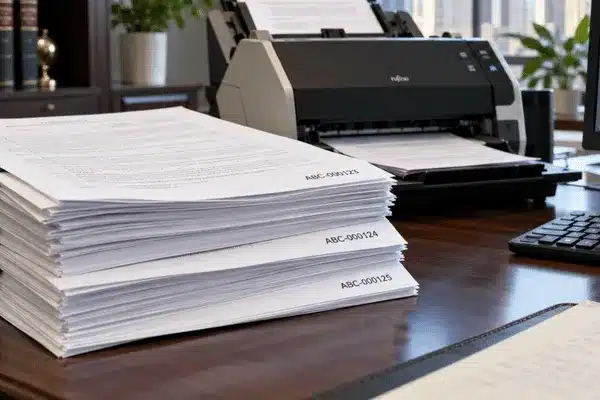

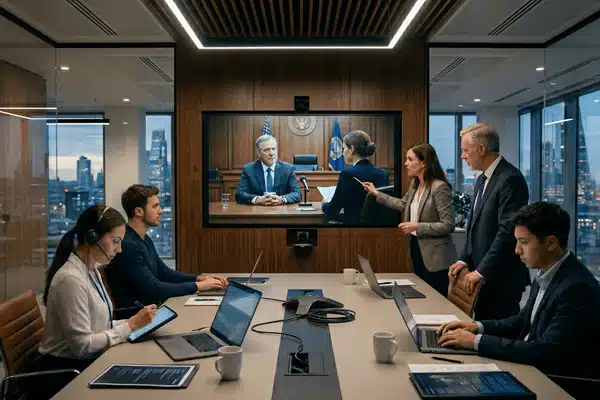
In many circumstances, law firm video services are becoming increasingly significant in 2026. Remote and hybrid hearings are becoming commonplace in many U.S. courts. Recorded testimony is transformed into searchable, clip-ready evidence by AI techniques. And authenticity challenges, including deepfake concerns, are officially on federal rulemakers’ radar. If your litigation support workflow still treats video as only a deposition recording, you may be missing useful case support tools.
This guide breaks down what modern law firm video services include, how they move cases forward, and what to look for in a provider.
Modern law firm video services go far beyond setting up a camera. A full-service provider covers:
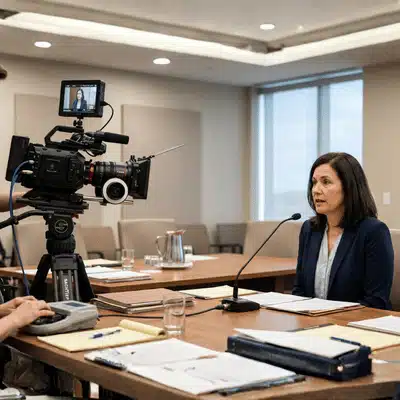
Providers that can deliver all of these services may be better positioned to support a broader range of litigation needs.
Research on how jurors process information shows that audio-visual presentations can help them remember and understand things better, especially when the information is complicated or technical. The problem is that design choices are important. It’s good to have clear sights and sounds. Footage that is messy and out of sync might make things more confusing instead of clearer.
A clear, well-produced video may make complex information easier to understand and retain.
Words are captured in a transcript. Pauses, tone, and emotion are captured in video. Recording methods may not alter a deponent’s appearance or manner, according to Federal Rule 30. Because of this, using appropriate video capture techniques is crucial for fulfilling legal and procedural requirements rather than only being a choice.
Law firm video services that use proper lighting, stable framing, and quality audio protect your ability to use that testimony effectively at trial.
In 2026, having video, especially searchable and usable video, will be a huge benefit. It involves having a designated, searchable, clip-ready video that you can use in a mediation statement or summary judgment motion without last-minute turmoil.
Synchronized video and transcript integration lets your team:
Well-built demonstratives make it easier for people to understand and remember your story. However, reviews of the evidence warn that visuals can also unfairly persuade people if they are wrong or too dramatic.
A professional provider makes materials for the courtroom that are closely linked to testimony and evidence that has been accepted. That can help lower risks that don’t need to happen while also making things clearer.
In many cases, remote testimony is still a crucial component. According to research from the National Center for State Courts, participants in remote hearings may feel that the proceedings are less fair than those held in person (65% vs. 84% in some early reports) (NCSC). The problem is not whether remote proceedings are employed, but rather how effectively they are handled.
Exhibit handling, audio management, redundancy planning, and pre-session tech checks are all included in professional law firm video services. This can lessen the likelihood that technical problems will influence the way testimony is received.
Additionally, “adequate protections” for remote testimony are required by Federal Rule 43. Those precautions are documented as part of the record by a professional setup.
Travel reduction is the obvious benefit of remote video depositions. The strategic benefit is earlier usable testimony, which means earlier motion filing, earlier negotiation, and faster clarity about witness risk.
Time saved can improve efficiency and may also strengthen case preparation and negotiation timing.
Frameworks for assessing deepfake claims under Rule 901 are currently being discussed by federal evidence rulemakers. However, the Scientific Working Group on Digital Evidence (SWGDE) advises against relying solely on video metadata since it can be changed without impacting playback.
The foundation for handling authenticity issues can be strengthened by a provider that employs verified tools, keeps audit records, and hashes files at ingest.
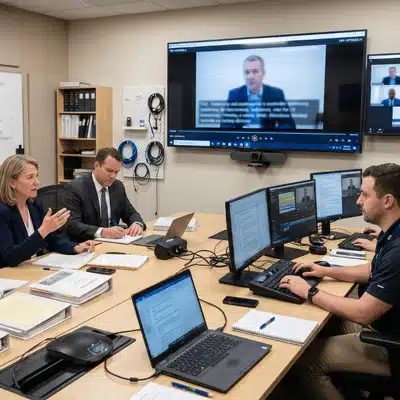
Centex Litigation provides end-to-end law firm video services from discovery through trial. That includes video depositions, remote and hybrid proceeding support, synchronized video and transcript integration, trial-ready editing, evidence documentation, and secure delivery.
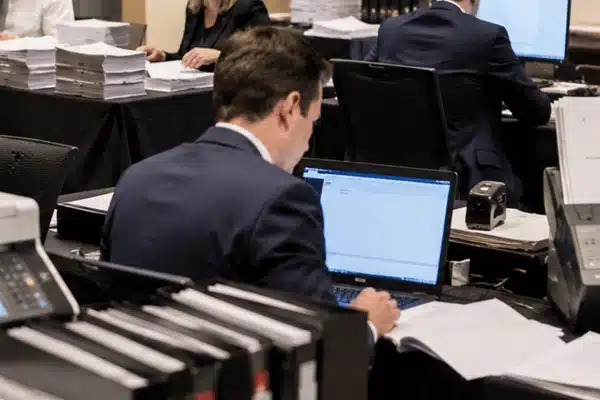
Centex also supports trial teams through dedicated office war room setup and war meeting room coordination, giving traveling teams a fully equipped operational base with the IT infrastructure, trial exhibits, and video playback support they need on the ground.
Video production for attorneys is also available for attorney-facing presentations, settlement videos, and demonstrative exhibits built to support your specific case narrative.
Professional video recording, remote proceeding assistance, synchronized transcript integration, trial clip preparation, and safe evidence transmission are all included in law firm video services. The entire case lifecycle, from the initial deposition to courtroom playback, is supported by contemporary vendors.
Transcripts lack the mood, tone, and delivery that video depositions capture. Additionally, they enable your team to quickly create searchable, clip-ready testimony that may be used in motions, mediation, and trial.
It involves timecoding a video recording so that it matches the printed transcript exactly. This enables lawyers to create clips straight from the record, jump to particular exchanges, and search testimony by keyword.
A specialized operational space for your trial team is known as an office war room, sometimes referred to as a war meeting room. It contains trial exhibits, video playback systems, IT infrastructure, and logistical assistance so that your team can react fast throughout the trial while lowering the possibility of technical interruptions.
Providers use file hashing at the time of ingestion, audit logs that can’t be changed, access controls, and verified tools to keep track of the chain of custody. The SWGDE guidance makes it clear that metadata alone is not enough; documented procedures for handling data are what hold up under scrutiny.
Yes. Centex offers full technical setup, audio control, exhibit handling, and redundancy planning for remote video depositions, hybrid hearings, and multi-location proceedings. They also have documented safeguards that meet the requirements of federal Rule 43.
Centex Litigation brings decades of litigation support experience and professional legal video services built for real case demands, from depositions to trial presentation support. That background helps law firms capture testimony, support the record, and keep proceedings running more smoothly.
Need court-ready legal video without last-minute problems? Schedule your deposition, remote proceeding, or trial video support with Centex Litigation today and get support from a team experienced in handling video needs from discovery through trial.