

The right legal support services can make a hard case easier to manage. A good team handles the practical work while attorneys focus on strategy. That may include serving papers, finding records, preparing exhibits, setting up equipment, or fixing a problem during trial.
Before hiring anyone, write down what you need and when you need it. A process service request is very different from a two-week trial setup.

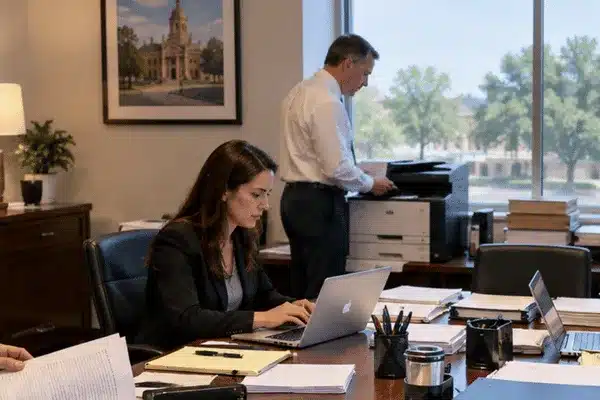
Legal support is the work that happens around a legal case. It helps keep files, people, equipment, and deadlines in order.
A firm may need help with:
Some law firms also use paralegal services. Paralegals may help with research, file review, and document work under an attorney’s direction. They cannot give legal advice on their own.
Legal support is the work that happens around a legal case. It helps keep files, people, equipment, and deadlines in order.
A firm may need help with:
Some law firms also use paralegal services. Paralegals may help with research, file review, and document work under an attorney’s direction. They cannot give legal advice on their own.
A modern case rarely fits into one box. Paper records still matter, but legal teams also work with emails, text messages, photos, maps, video, and large digital files.
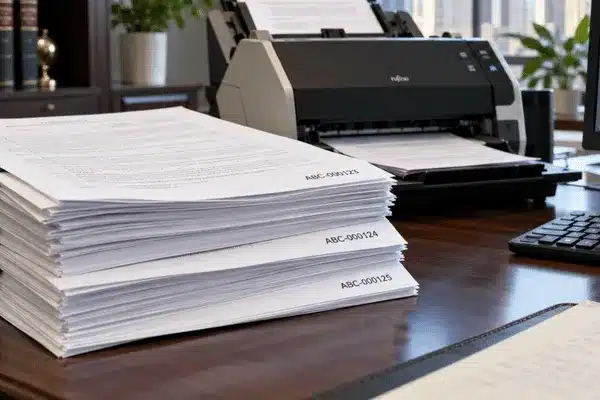
This is why litigation support services now cover more than copying. A support team may collect records, scan boxes of documents, prepare deposition exhibits, book a court reporter, or build a secure trial workroom.
During a long trial, small details matter. Someone may need to print a new exhibit before the court opens. A witness video may need editing that afternoon. A monitor may fail just before testimony begins.
Good support staff solves these issues without pulling attorneys away from the case.
Some firms use legal process outsourcing when their own staff is overloaded. They send selected tasks to an outside team, such as record review, copying, file sorting, or data entry. The law firm still controls the case and checks the final work.
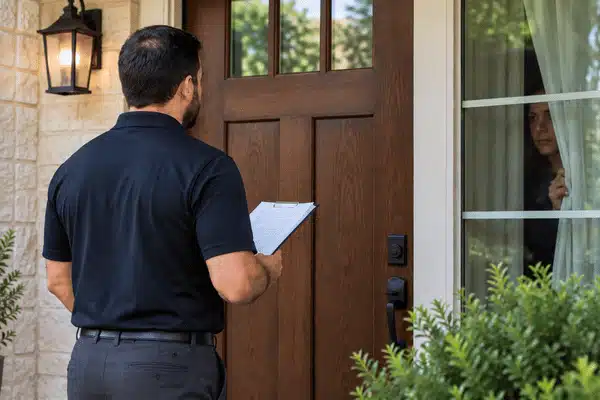
Legal process serving services deliver court papers to a person or company. The server must follow the rules of the court and the rules governing the document involved.
The work usually begins when the law firm sends:
The server then attempts delivery and records what happened. After service, the server completes a return or proof of service.
Not every paper can be left at the front desk or handed to a family member. Some documents require personal delivery. Others may allow mail or another court-approved method.
A clear address and correct instructions can prevent delays.
Texas and California use different service rules. The court, case type, and Texas and California use different service rules. The court, case type, and document all affect the right method.
In Texas, papers may be served by a sheriff, constable, certified process server, or another person approved by the court.
Personal delivery is common. Registered or certified mail may also be allowed in some cases.
When regular attempts fail, a judge may allow another method under Texas Rule of Civil Procedure 106. This may include email, social media, or another form of technology. The server cannot choose that option alone. The court must approve it.
The server files a return that states when, where, and how service took place.
California usually requires the server to be at least 18 years old and not involved in the case.
A complaint and summons are frequently delivered in person. There may be a substitute service available if personal delivery is not feasible. A qualified adult may receive the papers from the server, who may then mail another copy.
Service regulations differ from case to case, according to California courts. Different forms and deadlines may apply to civil, family, eviction, and small claims cases.
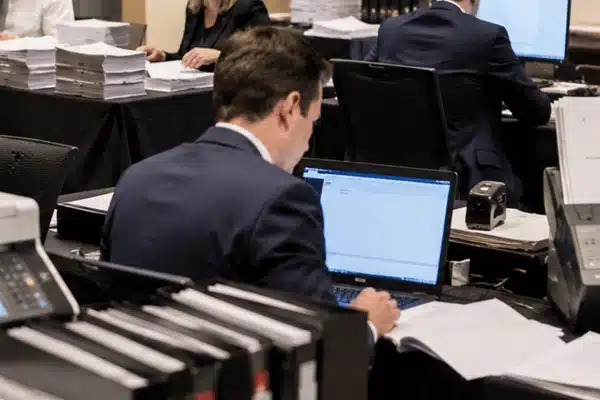
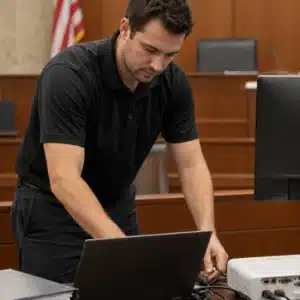
Attorneys can present evidence more clearly with the aid of trial technology. It also keeps the courtroom in motion.
Trial technicians frequently collaborate with:
During testimony, a trial tech may show a contract, enlarge one paragraph, or play part of a deposition. The tech may also place two documents side by side for comparison.
Backup plans are just as important as the main setup. Files should be saved in more than one place. Cables and adapters should be tested. Video clips should open before the judge or jury enters.
The Western District of Texas advises attorneys to test their devices before trial. Teams may also need to bring their own adapters and technical staff.
Do not choose a provider based on price alone. Ask how the team handles real case pressure.
Useful questions include:
For a trial in Waco or Central Texas, local knowledge can save time. A nearby team may know court access rules, delivery routes, local printing options, and workroom locations.
Process serving, records retrieval, legal copying, court reporting, legal video, and trial technology are a few examples of services. Additionally, some providers set up daily court deliveries and workrooms. The case determines the appropriate mix.
Records, evidence, services, equipment, and trial requirements are the main areas of litigation support. Legal work carried out under the guidance of an attorney is known as paralegal services. Neither takes the place of a licensed lawyer’s advice.
Sending specific support tasks to an outside provider is known as legal process outsourcing. Copying, reviewing records, scanning, and organizing files are typical tasks. Supervision is still the responsibility of the law firm.
There is no fixed timeline. Service may be quick when the address is correct and the person is available. More attempts may be needed when the recipient has moved or avoids service.
Yes, but only when a court approves that method. The requesting party must show why normal service did not work. The court order will state how service must be completed.
A trial technician manages courtroom displays, digital exhibits, video, audio, and presentation equipment. The technician also prepares backups and fixes technical problems. This lets the legal team stay focused on the case.
Texas Rule of Civil Procedure 106 allows a court to approve alternative service after unsuccessful attempts at standard service. The court may permit methods such as leaving documents with someone over 16 at an approved location, email, social media, or other technology likely to provide notice.
Location, urgency, travel, and service difficulty all affect process server costs. While some providers offer a fixed fee that covers several attempts, others charge per attempt. Before placing an order for a service, always check what is included.
In order to be certified, Texas process servers must fulfill the requirements set forth by the Judicial Branch Certification Commission. This entails finishing authorized training, submitting an application and payment, and passing the necessary fingerprint and criminal background checks.
Instead of using standard email attachments, use an encrypted cloud platform, secure file-transfer portal, or another authorized system. Before sending exhibits, check with the litigation support provider about file-size restrictions, accepted formats, security requirements, and naming conventions.
Strong case support comes down to preparation, clear roles, and quick response. Choose a team that understands deadlines, court rules, and the pressure that comes with active litigation.
Need help with process service, records, court reporting, or trial support? Contact Central Texas Litigation Support Services to get a quote for your case.