

Process serving in Texas is how a person or business receives official notice of a court case. A process server delivers the required papers and keeps a record of each attempt. Proper service gives the recipient a fair chance to respond and helps the case move ahead.
Quick answer: Many Texas civil cases begin with a citation and a copy of the petition. An approved server delivers these papers and prepares a return of service. If regular delivery does not work, the filer may ask the court to approve another method. The person served must respond by the deadline shown on the citation.
The papers that must be served depend on the type of case and the court handling it.
| Document | Main purpose |
| Citation and petition | Starts many Texas civil cases |
| Summons and complaint | Starts most California civil cases |
| Subpoena | Requires testimony, records, or an inspection |
| Eviction citation | Gives notice of an eviction hearing |
| Protective order papers | Gives notice of a requested or issued safety order |
| Writ or court order | Directs a person or officer to take a stated legal action |
Texas Rules of Civil Procedure 103, 106, and 107 cover the main service steps.
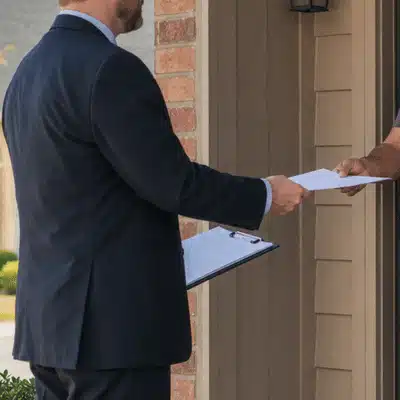
5. Complete the return of service. The server records the date, location, method, and person who received the papers.
Texas Rules of Civil Procedure 103, 106, and 107 cover the main service steps.
The return gives the court a written record of the service attempt. A judge may still review whether the delivery followed the required rules.
Texas and California use different terms and procedures for serving court papers.
| Step | Texas | California |
| Starting papers | Citation and petition | Summons and complaint |
| Personal service | Texas Rule 106 | California Section 415.10 |
| Backup service | Method approved by a judge | Substituted service after reasonable diligence |
| Mail service | Registered or certified mail | Mail with notice and acknowledgment |
| Proof | Return of service | Proof of service |
California Section 415.20 may allow substituted service at a home or workplace after reasonable efforts have been made. A copy must also be mailed as required by law. California generally requires county registration when someone completes more than 10 paid services in one year, although some exemptions apply.
Dallas County lists an $80 constable fee for process serving in Texas, a citation, or summons. The fee schedule took effect on January 1, 2026. Fees for other court papers and writs may differ.
Private process server costs depend on several factors, including:
Before booking the service, ask whether the quote includes mileage, extra attempts, filing fees, and rush charges.
Private process server pricing can vary depending on the circumstances of the service.
Before You Book: Ask whether the quote includes mileage, additional attempts, filing fees, and rush charges.
Gonzales is in Gonzales County, and Odessa is in Ector County. Both areas are subject to the same Texas service regulations. Coverage, travel time, and local costs may vary.
An $8 issuance fee is listed in Ector County’s 2026 fee schedule. Additionally, it lists $125 for certified mail service and $125 for other civil processes.
According to Gonzales County’s published fee sheet, issuing a citation costs $8, and providing personal service costs $100. Before filing, current costs should be verified with the county because the available fee sheet is dated 2024.
Process service specialists in Odessa and Gonzales may assist with:
There is no separate process server license for Odessa or Gonzales. The main differences involve service areas, travel needs, fees, and local court practices.

Legal process serving services are only one part of modern litigation support. Law firms may also need help collecting records, preparing exhibits, recording depositions, and presenting evidence in court.
Common litigation support services include:
Central Texas Litigation Support Services provides process service, record retrieval, court reporting, legal video, trial support, and other case support services. Its process service network handles assignments across Texas and in other states.
Trial technicians help legal teams organize and present evidence during hearings and trials. They often manage laptops, courtroom screens, presentation software, document viewers, screen sharing, and audio or video playback.
Courts and legal teams are advised by the National Center for State Courts to use systems that facilitate secure access, standard file formats, transparent evidence display, and accurate court records. Before the trial starts, files and equipment should also be tested.
The official delivery of court documents to an individual or organization is known as process serving. It notifies the recipient of a court case. After that, the server documents the information and submits a return to the court.
Papers may be served by a court-authorized adult, sheriff, constable, or certified process server. The server needs to adhere to Rule 103. The documents cannot be served to a party named in the case.
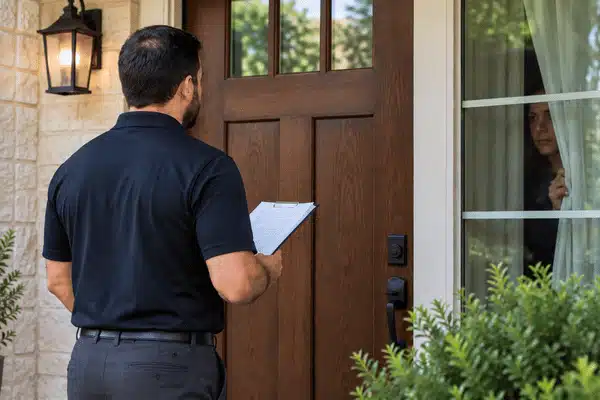
The server should document each lawful attempt to find and serve the person. The filer may then ask the court to approve another delivery method. An unapproved method should not be used.
Texas Rule 106 permits registered or certified mail as long as a return receipt is requested. Someone who is authorized to serve the papers must send them. The necessary proof of delivery must also be included with the return.
Verify the server’s certification, coverage area, costs, and anticipated response time. Find out how frequently you will get updates. Select a provider who provides transparent records of every attempt and complies with court regulations.
Proper service helps avoid delays and provides the other party with adequate notice. Before acting, always check the citation and the most recent court directives. This article is not legal advice; rather, it offers general information.
Need reliable service or help finding a hard-to-locate person? Book process service with Central Texas Litigation Support Services or request a written quote today.